By Jacob Irving, J.D., VP of Consulting Services at Bridge West Consulting
Life with severe spasticity from cerebral palsy is far from easy. According to John Hopkins, Spasticity is the “abnormal muscle tightness due to prolonged muscle contraction” and “is associated with damage to the brain, spinal cord or motor nerves”. Spasticity treatments are often invasive and accomplished by a “multidisciplinary team of doctors, nurses, physician assistants, therapists”. Treatments include physical therapy, intrathecal drugs, or surgery. Despite these available treatments, spasticity remains an area ripe for medical research as none of the available treatments provide the necessary relief for some spasticity patients. Despite more than a dozen years of physical therapy multiple times a week, I still suffer from significant ambulatory problems.
While credible medical organizations such as The National Academies of Sciences, Engineering and Medicine and The Journal of American Medical Association have released publications indicating that evidence exists for marijuana’s ability to treat spasticity, the U.S. remains behind in medical marijuana research for spasticity; namely because of Marijuana’s status as schedule I drug. Schedule I drugs, defined as having “no accepted medical use”, face significant research barriers including special DEA license registration, limited funding options, special federal funding barriers, and a significant limitation in federally legal places for researchers to acquire marijuana for medical research.
Despite bipartisan calls for easing medical marijuana research restrictions, promises made during the Biden Administration, Campaign Promises from Trump, approximately 30,000 public letters of support for rescheduling, and even a federal budget amendment that prevents the DOJ from pursuing medical marijuana cases, legal barriers to marijuana research continue to block medical research. It’s long past time for the federal government to act and remove Marijuana from schedule I like suffering constituents were promised. While American innovation has been stifled, UK-based GW Pharmaceuticals, now Jazz pharmaceuticals, developed a marijuana-based nasal spray treatment for spasticity available in 29 countries—but not the United States.
I have been working on medical marijuana policy in Louisiana since 2014 when I first met Senator Fred Mills and testified in favor of his bill, which was designed to allow patients with spasticity and cancer access to the medical marijuana which was already legal for them for over 20 years. Since graduating law school and helping to legalize medical marijuana in Louisiana, I have worked across the country and at home in the marijuana industry. I have seen and experienced the life-changing power of cannabis-based treatments, as well as the devastating consequences of marijuana’s outdated classification under federal law. I have seen the limited research, patient access, insurance coverage, and other barriers which cannot be allowed to continue.
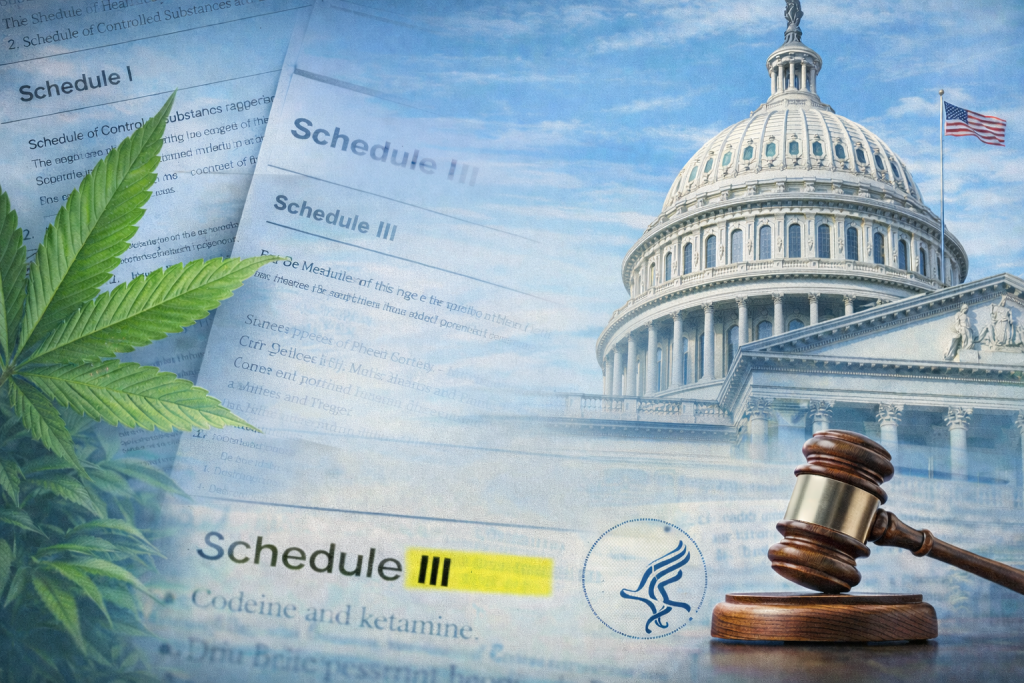
Despite the support for rescheduling, little progress has been made. While the Department of Health and Human Services recommended medical marijuana rescheduling in 2023, the DEA subsequently cancelled the marijuana rescheduling hearing. Marijuana’s medical research now again remains stalled, and I am calling on leaders in our federal agencies to make change.
Rescheduling Cannabis would begin a process of removing regulatory hinderances. Research institutions would be able to study cannabis the same as any other substance. Schedule III would bring cannabis into the same regulatory frameworks used to evaluate other medicines, instead of
drugs like heroin and meth, finally allowing researchers to apply for federal grants and conduct clinical trials. Rescheduling means increased protection for patients as many remain concerned about legal gray areas. Veterans using cannabis through state programs risk losing benefits. Professionals worry about liability. Banks and credit card processors often won’t work with retailers.
I’ve spent years fighting for a system where people don’t have to choose between treatment and legality. Rescheduling cannabis is about recognizing what so many of us already know: cannabis has medical properties which need to be researched immediately. This isn’t just policy—it’s personal.
Jacob Irving J.D., is a member of the 2018 class of the LSU Paul M. Hebert Law School and currently works as the VP of Consulting Services for Bridge West Consulting, a company working to increase the diversity of the cannabis industry by supporting new cannabis companies and established organizations as they build brands and maneuver through the complex regulatory hurdles in order to remain compliant.