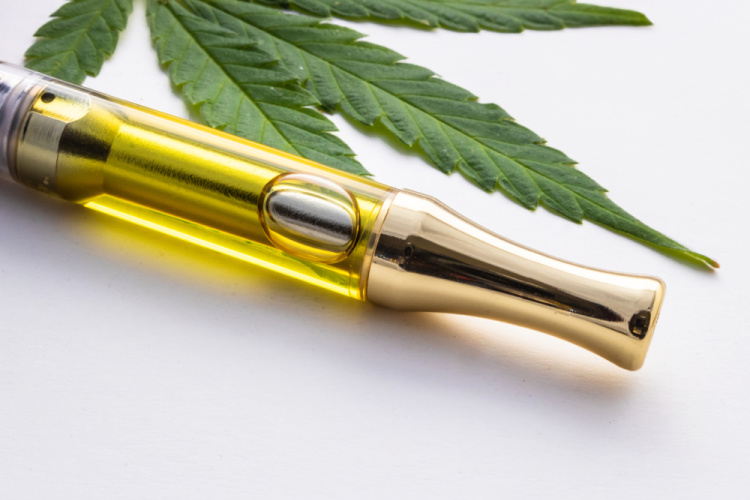
Cannabis Dispensary Tech: Popular Cannabis Software Solutions

how to open a dispensary

If you’re planning to enter the cannabis industry, here’s something you’ll need to focus on: Researching and implementing the best cannabis software solutions possible. Cutting-edge point-of-sale (POS) and register solutions are becoming a more common sight in the retail world, but they aren’t an optional upgrade for marijuana dispensaries. For dispensaries, this technology is absolutely a vital piece of equipment—as essential as your physical storefront and the products you fill it with.

If terms like “METRC” and “seed to sale” are new to you, today’s post will help you get oriented. A survey of some of the most popular and best cannabis software solutions, it’s designed to provide you with options, ideas, and a solid grounding in the implementation of these essential pieces of the cannabis industry puzzle.


How to Open a Dispensary: Tracking From Seed to Sale

These days, it’s rare—but not unheard of—to encounter an old-fashioned cash register in a café or boutique. In the cannabis world, which requires stringent tracking and tracing of products at every single touchpoint, that doesn’t fly. It’s functionally and legally mandatory to track sales accurately and closely.

Because the cannabis industry in the United States is still very much a state-by-state affair, there are a number of competing seed-to-sale and POS solutions. Here’s an introduction to a few of the most prominent options.

METRC: In the world of seed-to-sale tracking and compliance, METRC is an undisputed giant. METRC, in use by no fewer than 15 states—including California, the world’s largest legal cannabis market, is short for “Marijuana Enforcement Tracking Reporting Compliance.” As such, METRC isn’t a POS system but an overarching end-to-end tracking solution that in turn interfaces with various POS platforms.

This raises an important point: Whichever POS you end up using, it will have to integrate seamlessly with your state-mandated tracking plan. Given its ubiquity, there’s a fair chance it’s METRC.

Flowhub: With a focus on POS, inventory management, ID verification, and dispensary analytics, Flowhub is another heavy hitter in the retail cannabis world. Though the company only began processing retail sales in 2016, it has risen to prominence quickly. By the end of 2021, high-profile partnerships with Shawn “Jay-Z” Carter and others had brought the company’s valuation to over $200 million. If you’re shopping for a cannabis software solution, Flowhub will probably land among your considerations.

BioTrack: With an enviable position as the only vertical seed-to-sale cannabis software that’s fully integrated with METRC in every state that employs the platform, BioTrack is another comprehensive option, not only for retailers but for cultivators, processors, and other operators. If you’re operating in a vertically integrated environment, BioTrack is one of the strongest contenders in the field.

Leaf Logix: Another comprehensive seed-to-sale solution, Leaf Logix self-describes itself as the industry’s only native platform that services all cannabis business types. Able to serve cultivators, processors, distributors, and marijuana dispensaries with equal depth, Leaf Logix’s platform also provides accounting and financial support. Take note, as this is a potentially important factor given the challenges many cannabis businesses face when it comes to accessing basic financial services.

MJ Freeway: Like most of the platforms we’ve named here, MJ Freeway prides itself on providing legally-compliant software solutions for several types of cannabis businesses. In the case of MJ Freeway, this includes delivery—an important facet of the industry that’s only grown since the advent of COVID-19. With the capability to set schedules and draft delivery routes, MJ Freeway offers a powerful partner for cannabis businesses that are on the go.

How to Open a Dispensary: ECommerce Solutions

While POS solutions for in-person transactions are an essential part of the equation, there’s also the large (and growing) segment of e-commerce sales to consider. The following companies are among the leaders in this vital segment of the cannabis universe.

I Heart Jane: Described as a “fully integrated, turnkey” solution for e-commerce, I Heart Jane offers a flexible and intuitive platform for customers and retailers alike. As recent trends illustrate, the ability to support touchless or remote transactions is seen as a major upside for retailers looking to acquire and retain customers.

Dutchie: With a platform functionally similar to I Heart Jane’s, this Oregon-based software company offers easily scalable solutions designed to work within single-location, multi-state, or vertically integrated environments. Regardless of the setting, Dutchie’s interface remains sleek, intuitive, and flexible.

how to open a dispensary 2

How to Open a Dispensary: Loyalty Counts

Earning (and retaining) customer loyalty is a big deal in retail, and nowhere more so than in the realm of marijuana dispensaries. Here are a couple of software platforms designed to help you manage and leverage this hugely important factor in setting up your business for success.

springbig: With a stated goal of helping cannabis dispensaries and brands stand out and gain traction, this provider of marketing software focuses on increasing retention, boosting sales, and building loyalty among cannabis consumers. This is no easy feat in a fast-moving and highly fluid industry, but springbig delivers. The springbig platform includes customer relationship management (CRM) software designed solely for the cannabis industry.

TokeIn: Another cannabis-specific CRM system, TokeIn offers retailers flexible tools such as customizable loyalty and rewards programs. Relying on lightweight and highly effective SMS marketing, among other tools, the platform allows clients to easily track and manage this vital point of contact with their customers.

How to Open a Dispensary: Moving Beyond Cash

For any customer-facing enterprise, this is where the rubber hits the road: Payment. While marijuana dispensaries have historically had few (if any) options beyond cash, that’s changing—slowly. Here are a couple of the leading options.

Cannapay: Given how underserved the cannabis industry remains when it comes to financial services, Cannapay’s breadth of services come as very welcome news. Offering everything from standard credit card payment options, branded reloadable cards and even armored car pickup for the cash payments still prevalent in the industry, this Washington-based company functions as something of a one-stop shop for cannabis retailers.

CanPay: This platform allows consumers to use their debit cards securely to make purchases. While late and overdraft fees have earned some former customers’ ire, CanPay still stands as one of the very few practical alternatives to cash transactions in the industry.

How to Open a Dispensary: In Conclusion

With the number and scope of software platforms for marijuana dispensaries only growing, we hope this survey of some of the leading options provides some clarity.

If you’re preparing to enter the cannabis industry, we’d like to offer something more: Expert guidance and counsel. Since 2009, Bridge West has helped more than 400 current cannabis business license holders all across the United States navigate the daunting array of rules, regulations, and pitfalls when applying for and securing a license. Reach out; we’d love to talk.


Can I Launch a Cannabis Business in NY with a Criminal Record?

Can you work at a dispensary with a criminal record

We’ve written before about the rollout of New York marijuana legalization, and how the state is working to encourage participation in the cannabis industry by populations who have been unduly affected by the War on Drugs. Herein lies a paradox. Because some would-be entrepreneurs have had personal, negative interactions with the justice system, many of them wonder: Can you work at a dispensary with a criminal record?

In today’s post, we’ll explore this question, as well as provide background on New York marijuana legalization as a whole. If you’re looking to enter the New York cannabis market, this is important information you’ll want to have at the ready.

Can you work at a dispensary with a criminal record 1

How to Open a Dispensary: Equity in New York Cannabis

The Empire State’s Marihuana Regulation & Taxation Act (MRTA) is notable for putting social equity front and center. With a mandate to promote racial, ethnic, and gender diversity when issuing cannabis licenses, advocates hope the program will have a positive, lasting, and galvanizing effect for historically marginalized license applicants.

To that end, the state stipulates that preference will be given to social and economic equity applicants, with a goal of 50% of licenses going to such applicants. These “Social and Economic Equity” applicants will be entitled to such benefits as fee waivers or reductions, access to low-interest or interest-free loans, and no-cost counseling services such as small business coaching and financial planning.

What’s more, these special dispensations are designed to prevent they’re being used as a “back door” for non-qualifying applications. The law prohibits the sale or transfer of a social equity license for three years after initial licensure unless the license is sold or transferred to another qualified social equity licensee (and the transfer is approved by the CCB).

We should note that, finally, the CCB has demonstrated an interest in maintaining geographic diversity among license holders.

Can a Felon Own a Dispensary? Crucial Questions

What bearing does a prior felony conviction have on participation in or ownership of a cannabis business in New York? While many New Yorkers will enjoy automatic expungement of some types of cannabis-related convictions, the implications on licensing are somewhat different. At present, a cannabis-related conviction automatically disbars the person from working at a medical dispensary.

However, the wording of the MRTA allows for some discretion on the part of the Cannabis Control Board. While mandating that cannabis businesses can’t employ those convicted in the last three years of a felony related to the running of a business, the language notes that “a felony conviction for the sale or possession of drugs, narcotics, or controlled substances is not substantially related” in this regard. In other words, the Board is signaling that—within limits—it’s open to changing the paradigm about prior convictions under a legal rubric acknowledged as discriminatory.

When it comes to ownership of a cannabis business, the Board requires full disclosure of any prior cannabis-related convictions. Again, this doesn’t equal automatic, permanent disqualification. Rather, the implication is that the Board will place any prior convictions in context.

Can you work at a dispensary with a criminal record 2

New York Marijuana Legalization: In Conclusion  

While the wording of the state’s licensing requirements may present something of a gray area, there’s no reason to leave yourself in the dark.

If you’re committed to securing a NY cannabis license, we’re here to help. Since 2009, Bridge West has helped more than 400 license holders all across the United States navigate the daunting array of rules, regulations, and pitfalls around applying for and securing a cannabis license. Reach out; we’d love to talk.

NY Cannabis Update: Who’s Who on the New York Cannabis Control Board?

new york cannabis

new york cannabis 1

Even given the dynamic and fast-moving nature of the cannabis industry, the upcoming launch of New York’s adult-use cannabis industry is noteworthy. With some sources projecting that New York cannabis sales could reach $3.7 billion by 2025, a large number of investors and entrepreneurs are lining up to enter the Empire State’s market.

If you’re interested in understanding New York cannabis licensing requirements, we suggest you get up to speed with our recent blog on the topic. In today’s post, we’re going to shift our focus to the five members of the New York Cannabis Control Board (CCB), the office charged—in concert with the state’s Office of Cannabis Management—with creating the regulatory framework for the New York cannabis industry.

A diverse group that includes veterans from the worlds of finance, labor unions, state politics, and beyond, the members of the CCB are some of the most crucial figures in New York cannabis regulation. Here’s an inside look at their backgrounds and their goals for the New York Cannabis Control Board.

New York Cannabis Control Board: Meet the Members

While the state has faced criticism for the slow rollout of the CCB, Governor Kathy Hochul has signaled her investment in “jumpstarting” the process. After the Governor announced the final two nominees to the CCB in late September, the new CCB held its first meeting in early October 2021. Here are the current members of the CCB and their most notable experience:

new york cannabis 2

Tremaine Wright, Chairwoman

As a former Brooklyn Assemblywoman and former chair of the Black, Puerto Rican, Hispanic and Asian Legislative Caucus, Tremaine Wright brings a wealth of knowledge around the issues facing communities of color. As current director of the Office of Financial Inclusion and Empowerment, Wright is expected to help ensure that cannabis businesses have adequate access to banking and other financial services.

Jen Metzger

Like Chairwoman Wright, Former State Senator Metzger brings strong legislative experience to the CCB. First active in local government in the Town of Rosedale and later elected as a New York State Senator for a term, Metzger worked to help fight predatory utility rates and practices and promote greater access to broadband in underserved areas.

Adam Perry

A partner at the Buffalo law office of Hodgson Russ, Adam Perry specializes in employment-related litigation and helps manage the firm’s cannabis and hemp-related practice. According to Speaker of the New York State Assembly speaker, Carl Heastie: “Adam W. Perry is deeply invested in New York’s communities, and will bring that dedication to his new role and be an asset to the Cannabis Control Board.”

Reuben R. McDaniel, III

As the President and CEO of DASNY, Reuben McDaniel is an accomplished executive known as a team player. Prior to his appointment, McDaniel was an investment banker with more than three decades of experience in public and corporate finance.

Jessica Garcia

A rising figure in the labor union world, Jessica Garcia serves as Assistant to the President of a national union representing workers from across the food supply chain, retail, and healthcare. What’s more, Garcia brings strong experience as an organizer and immigrant policy advocate. As such, she serves on several prominent state and local boards.

New York Cannabis Control Board: The Groundwork for Success

Learning about the members of the CCB is a valuable facet of the landscape in the New York cannabis industry, but understanding how the board members’ interests and backgrounds may influence the sector could be a business differentiator. That’s why partnering with an experienced guide such as Bridge West can dramatically increase your chances of success.

Drawing on our deep knowledge of New York’s regulatory and business environment, we guide prospective applicants through the maze of rules and regulations involved in securing a cannabis license there.

Ready to talk? Reach out anytime.

How to Win a Cannabis License in New Jersey as a Diversely Owned Business

Cannabis License

As New Jersey gears up to launch its much-anticipated legal cannabis industry, the Garden State is sending out a clear signal: The state intends to spur diversity in cannabis, and prioritization will be given to those cannabis business license applicants who represent diversely owned businesses. If you’re a woman, a member of an ethnic minority, or a disabled veteran, this presents an opportunity for you to secure a license in what will be a highly competitive arena.

We’ve talked about the cannabis licensing requirements in New Jersey before (we suggest you revisit that article to familiarize yourself with the landscape first). Today, we’ll talk about the ways in which the state plans to incentivize these diversely owned businesses and share some of the ways you can gain a competitive advantage.

Cannabis Licensing Requirements in New Jersey: Identifying Diversely Owned Businesses

Cannabis License 3

The desire to support diversity in cannabis is hardly limited to New Jersey. From coast to coast, many states have dedicated resources and special programs with the goal of bringing underrepresented populations into the legal cannabis industry. But New Jersey’s program—enshrined in the recently-adopted adult-use law—is robust and potentially far-reaching. The state’s Cannabis Regulatory Commission (CRC) earmarked nearly one-third of all cannabis business licenses to diversely owned businesses. At present, 15% of licenses will be awarded to businesses certified by the State of New Jersey as Minority-Owned Businesses, and an additional 15% will go to those with designations as Women-Owned Businesses and Veteran Owned Businesses.

On a technical note, New Jersey defines “diversely owned businesses” as those in which at least 51% of the ownership interest is held by persons who are minorities, women, disabled veterans, or any combination thereof; and the management and daily business operations are controlled by one or more of the minorities who own it. The State has a formal process to apply for these certifications.

Impactful though this stands to be, it’s not the end of the story. In addition to the priority given to minority applicants, the CRC will prioritize applicants with ties to “impact zones”—those municipalities negatively impacted by unemployment, poverty, or past cannabis enforcement activity.

In addition, the CRC—addressing concerns that many current cannabis license holders have out-of-state ownership—will give priority to longtime state residents. The Commission defines these as those people who have resided in New Jersey for at least five years and who hold at least a 5% stake in any entity seeking a cannabis license in New Jersey.

Cannabis Licensing Requirements in New Jersey: Get a Leg Up

As we stated earlier, New Jersey’s focus on diversity in cannabis presents a special opportunity for minorities, women, and disabled veterans. But these attributes on their own aren’t enough to guarantee success when it comes to crafting a winning cannabis business license application. Successful applications will need to demonstrate:

    • Direct experience in the cannabis industry
    • A detailed business plan that includes all pertinent, cannabis-specific aspects—including compliance software and reporting tools
    • Demonstration of financial and managerial competence
    • Environmental-impact plans and sanitation procedures
    • Safety and security procedures, including those for cybersecurity and diversion prevention
    • An emergency management plan, as well as procedures to report adverse events

Whether you represent a diversely owned business or not, Bridge West can dramatically increase your chances of application success. Over the past dozen years, we’ve helped over 400 applicants win cannabis business licenses all across the United States. We guide entrepreneurs through the many rules and regulations involved in securing a cannabis license, and the relationship doesn’t end there. With access to funders, mentors, and other key stakeholders, Bridge West is the partner you need to maximize your chances of success in this fast-moving and competitive industry.

Ready to talk? Reach out anytime.

How to Get Licensed in New Mexico’s Medical Cannabis Market

new mexico cannabis

If you follow cannabis news in New Mexico, you know it’s been a heady few months: After years of speculation, adult-use cannabis has officially crossed the finish line. With Governor Michelle Lujan Grisham (D) having convened a special legislative session, in June of 2021 the Land of Enchantment officially threw open the doors for adult-use cannabis cultivation and possession.

You’ll note that “adult-use cannabis sales” aren’t on that list. That’s because the state’s Cannabis Control Division was granted a three-month delay in order to formulate adult-use cannabis licensing requirements in New Mexico. But as of September 1, 2021 at the latest, the state is slated to begin processing license applications. And once those adult-use dispensary licenses are issued and cannabis training programs get underway, the state is tasked with beginning adult-use sales no later than April 1, 2022.

What does this mean for those looking to enter the New Mexico cannabis industry? With some sources estimating that the state’s legal cannabis industry is poised to generate some 11,000 new jobs and $300 million in annual sales, it’s Go Time for New Mexico cannabis entrepreneurs. And that means the competition is going to be fierce, with the state scrutinizing each and every application to weed out those deemed unqualified or unprepared.

If you’re looking for a foot in the door, we’d like to help. We’re Bridge West, a team of seasoned cannabis industry veterans with decades of combined experience and a proven approach to cannabis business licensing. We offer our clients an unparalleled advantage in terms of start-up business planning, licensing and advisory services, and much, much more. We invite you to begin your education with this overview of the regulations governing the cannabis licensing requirements in New Mexico.

Adult-Use Cannabis Licensing Requirements in New Mexico: The Regulatory Framework

New Mexico administers its cannabis program through the Cannabis Control Division. And while the state currently offers a number of cannabis business licenses, we’ll narrow our focus to New Mexico’s adult-use cannabis licensing requirements for today’s purposes.

New Mexico Adult-Use Producer License: This license permits the cultivation of cannabis plants (including the testing of unprocessed cannabis products by a licensed cannabis testing laboratory). License-holders may transport unprocessed cannabis products to other licensed cannabis establishments, as well as sell cannabis products wholesale.

Licensing Fees: $2,500/year; $1,000/year for each additional licensed premises.

New Mexico Adult-Use Manufacturer License: This license permits the holder to process cannabis into edibles, oils, and other products; package cannabis products; have cannabis products tested by a testing facility; and purchase, acquire, sell, and transport wholesale cannabis products to other licensed establishments.

Licensing Fees: $2,500/year; $1,000/year for each additional licensed premises

New Mexico Adult-Use Retailer License: This license allows the holder to sell cannabis products to consumers, qualified patients, primary caregivers, and reciprocal participants.

Licensing Fees: $2,500/year; $1,000/year for each additional licensed premises

New Mexico Adult-Use Cannabis Courier: This license permits the holder to transport cannabis products directly to consumers, qualified patients, primary caregivers, and reciprocal participants.

Licensing fees: $1,500/year; $1,000/year for each additional licensed premises

New Mexico Cannabis Consumption Area: Regulated in a similar manner to a microbrewery, these are areas where cannabis products (but not alcohol; that’s a separate license) may be consumed.

Licensing fees: $2,500/year

New Mexico Adult-Use Cannabis Testing Laboratory: This license permits the holder to sample, collect, test, and transport cannabis products for the purpose of testing and assessment.

Licensing Fees: $2,500/year; $1,000/year for each additional licensed premises

In addition, New Mexico will issue licenses to cannabis servers, cannabis training and education programs, and several types of vertically integrated cannabis businesses.

Now that you know your breadth of options, let’s turn our focus to a few of the key points you’ll need to keep top of mind if you’re preparing to apply for a New Mexico cannabis license.

Cannabis Licensing Requirements in New Mexico: General Considerations

Following the lead of other states intent on redressing the inequities of the War on Drugs, New Mexico is demonstrating a commitment to social equity in its legal cannabis industry. This means, among other things, that while applicants may not have prior convictions “substantially related to the qualifications, functions or duties” implicit in their roles, this does not necessarily include prior cannabis convictions. At present, disqualifying felony convictions include fraud, embezzlement, deceit, or ‘involving a minor’ in drug sales.

As implied by our comments earlier in this article, New Mexico has also signalled an openness to vertical integration. At present, multiple licensees may occupy a single licensed premises, and the CCD may not place restrictions on the number of licensees occupying a single licensed premises, or on the number of locations of a single licensed cannabis business.

Cannabis Licensing Requirements in New Mexico: Business and Operations Plans

Yes, a business plan is required to be submitted with cannabis license applications. Importantly, it is also the case that a strong and clear-eyed business plan is one of the most important foundational tools for you and your stakeholders. And when the CCD is reviewing your application, your business plan will provide a singular opportunity for you to demonstrate your strong grasp of the New Mexico cannabis industry, your understanding of the legal and regulatory playing field, and the ways you plan for your business to positively impact the community you serve.

Over and above this, having a solid business plan is a major factor in your ability to attract investors, partners, banking and other related financial institutions, and additional key players.

If a business plan is a strategic roadmap for your enterprise, an operations plan is its more tactical counterpart. Submitting a solid operations plan will signal to the license review board how you’ll ensure that your facility will be in compliance with the state’s security, diversion, public safety, and other requirements. We encourage you to envision your operations plan as an “operator’s manual” for running a successful, compliant, and profitable cannabis business.

Cannabis Licensing Requirements in New Mexico: In Conclusion

If you’re interested in gaining entrance to the New Mexico cannabis industry, we can help. As a partner filled with highly-skilled and seasoned cannabis industry consultants and guides, Bridge West is ready to help new and emerging cannabis companies find financial and banking solutions, connect with potential stakeholders, and chart a course for success in this exciting—yet challenging—new landscape. We invite you to reach out anytime to schedule a consultation.